
If you make a list of “people responsible for canceling the most funerals,” the first nominees would probably be medical advances: Jenner with smallpox, Fleming with penicillin, Salk with polio.
You might not bet on an agronomist from Iowa who won the Nobel Peace Prize in 1970 for making plants shorter. He literally bred wheat that put less effort into being tall and majestic, and more effort into making grain.
The perfect protagonist
Norman Borlaug has the kind of origin story biographers love: born on his grandparents’ farm in rural Iowa in 1914, grew up during the Great Depression watching people go hungry, decided to “do something about it,” studied plants with all the ambition a 20-something could muster, moved to Mexico in 1944, and created a new kind of wheat that fed a billion people in South and East Asia who were facing famine conditions in the 1960’s. Cue the swelling strings.
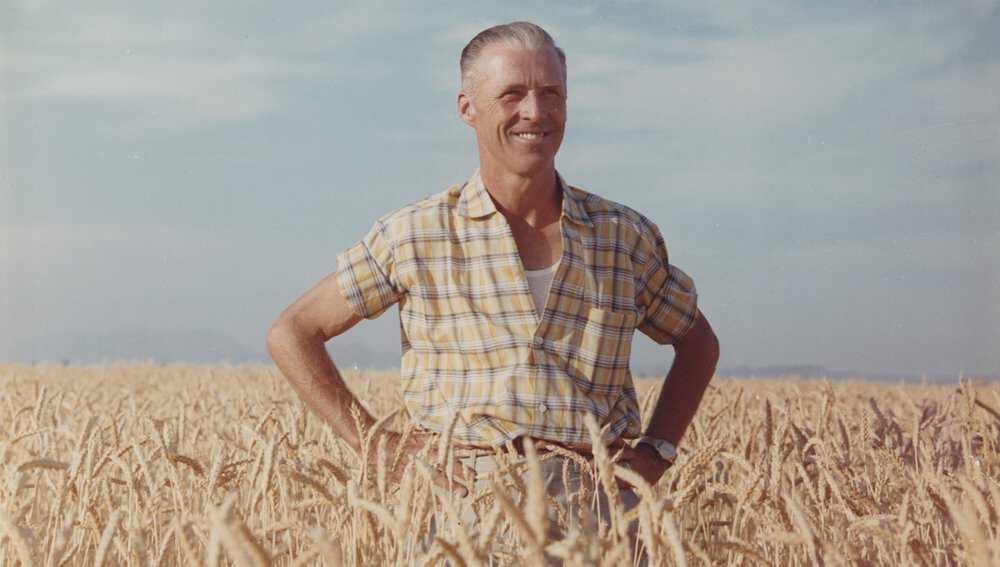
The trouble with this narrative is that “determination” is not a technique. Millions of other kids grew up during the Great Depression. Lots of people have set out to “solve hunger.” Plenty of equally determined people never got anywhere near a billion-lives outcome.
We should start the same way he did: understand the problem he was trying to solve. What is the problem that plausibly threatened a billion lives in a domain so narrow that a single man in the right place could solve it?
Don’t fall down
Tall stalks of grain are more likely to fall over. This is bad in the immediate, and potentially catastrophic on a longer time horizon.
When a stalk of grain falls down, it’s bad for the individual stalk: it’s now in the shade, and the leaves responsible for photosynthesis can get bent, which in turn means it produces smaller grains (and fewer grains).
But “growing fewer grains” is the least of your problems, because combines are built to harvest upright grain: downed stalks of wheat may not get harvested at all.
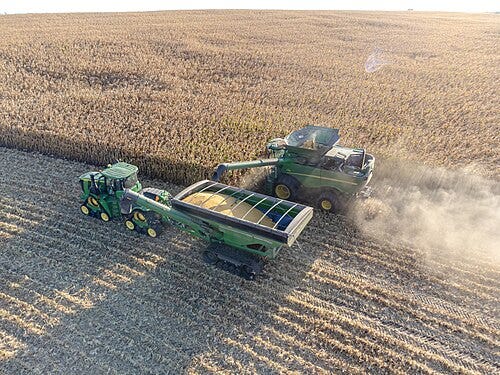
A downed stalk of wheat might seem “useless” or completely wasted. But it gets even worse than that: a downed stalk is bad for the wheat around it, because a flattened plant sitting against wet soil traps moisture, creating a humid environment that is ripe for mold or rot. Fungi can spread: a single fallen stalk can ruin multiple stalks of wheat.
And if that moldy stock of wheat gets harvested, things get worse still: that can introduce moisture and rot into the bin of what should have been dry grain, creating what are known as “hot spots.”
The “hot spots” are literally hot
If you stick a temperature probe into the grain bin, you can find localized areas that are warmer than the rest of the grain by a few degrees, and the culprit is often some fungi or bacteria that are respiring. Respiration in bacteria generates heat and CO2 and water (just like the heat + CO2 + water that leave your mouth every time you exhale).
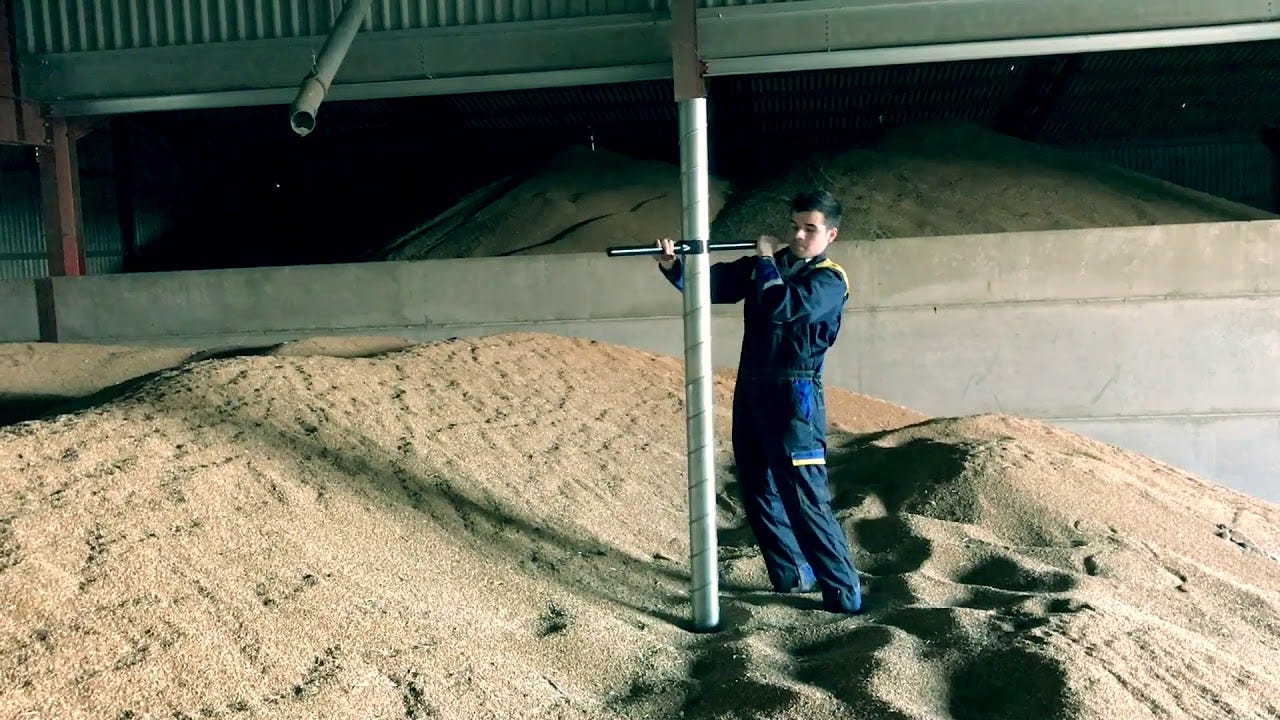
And that water and heat in turn makes the environment even more hospitable for bacterial growth, which in turn produces more water, which is even more bacteria-friendly, which is how you get feedback loops that can ruin even more grain, until massive batches of grain get ruined:

It’s bad to be tall
The problems of wheat growing too top-heavy and falling over were really bad. They were so bad, in fact, that many farmers intentionally held back on fertilizer to prevent their wheat from growing too much.
Not only did the fertilizer make the stalks top heavy by making them taller, but bigger grains at the end of the stalk added mass to the top of the plant, which made the “falling over” problem worse.
(On a smaller scale, there was a similar problem with irrigation: more water means more plant growth, leading to more of the same problem. So just as some wheat farmers “under-fertilized” their crops to prevent too much growth, some “under-irrigated.”)
Think about how crazy that is: farmers are forced to intentionally withhold water and nutrients from their crops for fear that the crops will grow too lush!
Too much of a good thing?
Historically, the biggest problem for wild wheat plants had always been too little nutrition, rather than too much. Farmers in the 18th century never had to worry about “what happens if the wheat grows too tall?” But the advent of modern nitrogen-based fertilizer changed that.
The problem wasn’t that the wheat was growing too big, but that it was growing too tall. If you could just get the wheat to use all the extra nutrients to grow bigger grains of wheat, we’d end up with more edible food, and everyone would be happy. But wild wheat plants don’t behave like that.
That’s the world that Normal Borlaug walked into: wild cultivars of wheat had problems. Natural selection had not created plants that were optimized for feeding humans.
Fortunately, farmers aren’t limited to growing what occurs “naturally.” Plant breeders can select for the traits they like, and many of the plants we enjoy today look nothing like their counterparts from hundreds of years ago.
For example, this is what watermelons looked like back in the 17th century:

We can breed fruits to be juicier, with more flesh and less rind. And in much the same way, we can breed wheat to grow better.
Borlaug’s seed
Let’s skip ahead to the end of the story: semi-dwarf wheat plants are bred to have shorter, stiffer stems. That lets them stay upright even when well-fed and well-watered:

This fully unlocked the benefits of modern fertilizer (and irrigation) for wheat farmers: extra nutrients would now turn into more kernels and bigger heads of grain, rather than causing the plants to “grow too tall.”
And, as discussed earlier, upright wheat is easier to harvest cleanly, and less likely to mold on the ground.
The combined effect is that the benefits of more fertilizer actually show up in the grain bin, rather than getting wasted in growing longer stems or contributing to plant spoilage.
This wasn’t Borlaug’s only contribution. The plants were also bred to be “rust resistant.” Rust is a fungal plant pathogen that looks like this:
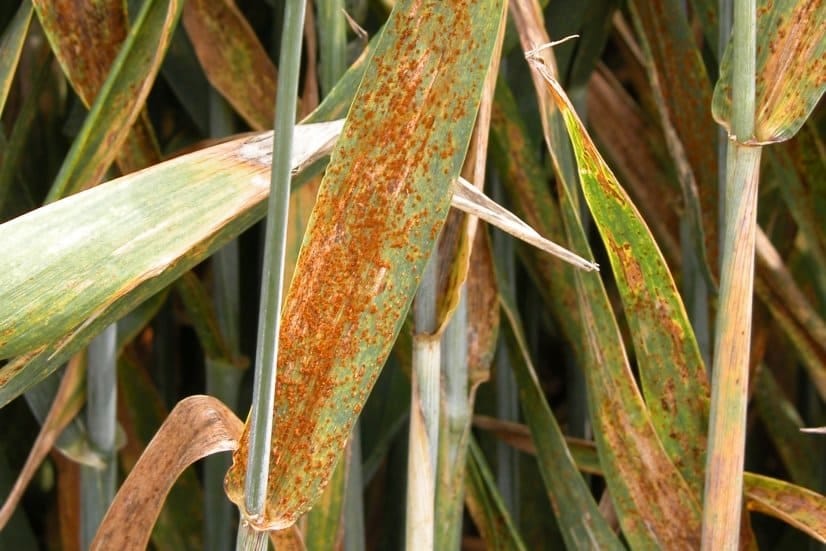
If you ever hear farmers complaining about plants “rusting,” they’re talking about this pathogen; they’re not out there growing cyborg plants.
Those are desirable improvements. But how do you actually get there, instead of waiting around for the perfect plant to just emerge?
Speedrunning the breeding process
Norman Borlaug finished his PhD in plant pathology in 1942, and after several years of wartime R&D work at DuPont, he moved to rural Mexico to stare at wheat.
More precisely, he went to work for the Rockefeller Foundation’s Mexican agriculture program. The important question is: why Mexico?
Mexico had a cheat code. It let you run wheat breeding at 2x speed.
The problem: nature gives you one roll of the dice per year
Before Borlaug, for millennia, the paradigm had been “one generation of wheat per year.”
You plant your experimental plots in late spring, they grow through the summer, you harvest in early fall, you keep seed from the best-performing plants, and then you wait until next spring to plant the next generation.
The whole breeding cycle is really only ~5 months of growing, wrapped inside a 12-month calendar year.
The bottleneck here is climate. There are reasons you plant in May and not in, say, January: if you’re in a colder climate, maybe January’s soil is a solid waterlogged graveyard where seeds go to die of fungal disease.
If you only have one site, you’re stuck with that rhythm. But if you can find two sites with non-overlapping growing seasons, you can play a neat trick:
Grow wheat at Site A during the summer. (Plant in spring, harvest in fall.)
Harvest it, pick the winners.
Immediately ship those seeds to Site B, which is just starting its growing season.
Grow the next generation at Site B. (Plant in fall, harvest in spring)
Harvest again within the same year.
Result: two generations per year instead of one.
The perfect location
But how do you get two sites with non-overlapping breeding seasons, one where wheat grows in the summer, and one where wheat grows in the winter? You go to Mexico, where Borlaug found that different elevations provided different growing conditions:

Toluca Valley: Higher elevation, rain-fed, cooler climate that “feels like” many parts of the US or Europe. You plant in May/June, harvest in October. This is your summer cycle.
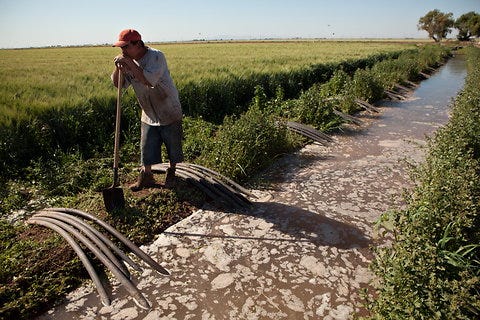
Yaqui Valley: Low elevation, much warmer climate, irrigated (rather than rain-fed). Here, you plant November, and harvest in April/May. This is your winter-spring cycle.
The calendars don’t overlap. And thanks to the massive elevation difference, Mexico gives you these two “opposite” climates only a day’s drive apart.
The moment you’re done harvesting Yaqui in spring, you can take your best lines, load them on a truck, drive up to Toluca, and get them in the ground for the summer cycle. Then in the fall you repeat in the other direction.
This system of driving seeds back-and-forth between two Mexican sites to get two breeding cycles in every calendar year was known as “shuttle breeding.”
“Couldn’t you just do this in Europe?”
In principle, you could have had a similar breeding program in Europe: maybe shuttle seed between somewhere like Sicily (warm winters) and Denmark (cool summers).
But crossing borders means customs agents, who are understandably suspicious when you start hauling massive bags full of foreign plant material through their checkpoints.
Then there’s the fact that all of this is happening in the pre-jet age: moving seed from Sicily to Denmark means a minimum of 3 days by train and 1 day by ferry, with lots of hand-offs and opportunities for delay, spoilage, or bureaucratic border nonsense.
Mexico had what almost nobody else did in the 1940s: two de-synced wheat calendars and a short road in between.
The other advantage of two breeding environments
If you only breed in one lovely valley, you get wheat that is very talented at performing in that one specific lovely valley. That wheat has been “trained to the test,” and might start to fail if you try to grow it somewhere else. Change the altitude, humidity, day length, local pathogens, or the fertilizer dosage, and suddenly you might discover that the star student doesn’t have the answers.
The Mexican wheat avoided this problem entirely by being alternately bred across two different environments. Bouncing back-and-forth between Toluca Valley and Yaqui Valley didn’t just make the wheat-breeding faster, it also made the end product more robust.
This wheat could grow at low elevation or high elevation, warm or cool, different types of pathogens, different dosages of water and nitrogen fertilizer depending on what the environment allowed. This wheat was battle-tested. But it still had the problem of growing too tall if you added to much fertilizer.
Deus ex machina?
In the 1950s, the famous Norin-10 dwarfing genes arrived from Japan into North American breeding programs. These genes are what make wheat short and sturdy enough to handle heavy fertilizer without falling over.
So the thing Norman Borlaug is most famous for, the semi-dwarf wheat, didn’t even show up until almost a decade into his Mexican work, and the crucial genetic ingredient literally comes from someone else’s breeding program on another continent. In a real way, he “got lucky.”
But there’s an aphorism that I’m fond of: “luck is preparation meeting opportunity.”
Borlaug spent a decade building an industrial-scale pipeline that could notice a useful trait when it appeared, drag it into his own material, and test it under realistic conditions. By the time Norin-10 arrived, he already had:
rust-resistant Mexican lines adapted to multiple environments,
a two-site, two-crop shuttle breeding program that could cross-breed these dwarfing traits into high-yield wheat lines at twice the speed,
a detailed understanding of things that go wrong with wheat when you pour on fertilizer and hope for the best.
So when a short, stiff Japanese wheat showed up, Borlaug had a machine that could notice the right trait, recombine it with the right backgrounds, and make it actually work outside a single pretty valley.
Other breeders got access to Norin-10 long before Borlaug’s Mexico program. Most of them didn’t save a billion lives.
Should Borlaug get all the credit?
In the mid 1960’s, many parts of South Asia were facing famine conditions. The Mexican-bred semi-dwarf wheat offered a bargain that they were glad to take: “give us fertilizer and water and we will not face-plant, give us rust and we will not get eaten alive, plant us at a wide range of latitudes and we’ll still bloom on time.” From there, the conclusion feels practically forgone.
But of course, it took a monumental amount of unglamorous human effort to multiply the seeds, procure the fertilizer, and build the canals for irrigation that allowed the wonderful wheat strains to do their job after South Asian farmers planted them. Indian geneticist and plant breeder M.S. Swaminathan gets much of the credit for spearheading a movement that introduced the new wheat strains to India and Pakistan at a time when they were facing famine conditions.
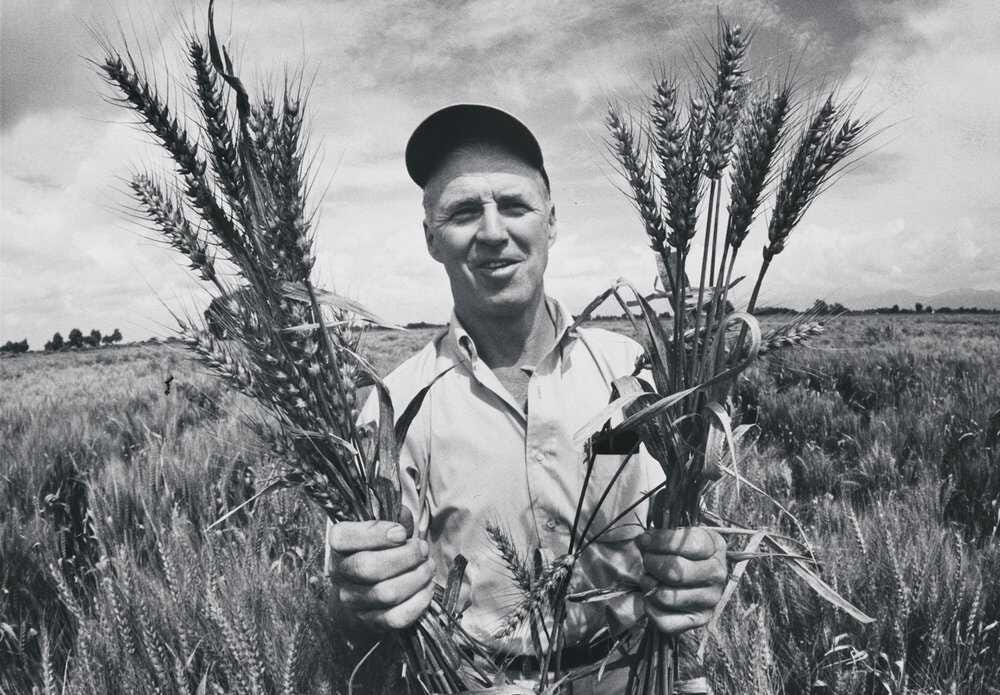
The Norman Borlaug Nobel Prize nominations start in 1968, with the Prize finally being awarded in 1970. He’s celebrated as “the man who saved a billion lives” by Texas A&M and Auburn University and University of Minnesota. Is attributing all of this to one man missing the point?
The dwarfing genes that made all of this possible came from a cultivar bred in Japan in the 1930s, collected during the postwar occupation, and passed around to breeding programs worldwide. Borlaug requested them in 1953. Plenty of other breeders had access to the same genes.
And perhaps that is a hint at why Borlaug deserves unique credit.
At the start of this post, I noted that “determination” is not a technique. Plenty of equally determined people grew up during the Depression, watched people go hungry, and never got anywhere near a billion-lives outcome.
The same is true here. “Having access to Norin-10” is not a technique either. Plenty of breeders got those genes. Most of them didn’t have a billion-lives impact.
What separated Borlaug wasn’t a desire to feed the hungry, or access to the right wheat genes. It was his championing of the “shuttle breeding” concept, squeezing two wheat-growing seasons into 12 months.
But Borlaug’s contribution wasn’t just realizing that 5 months plus 5 months is less than 12 months. It was realizing this, and being willing to try it when no one else was.
Borlaug first tested his idea unofficially: he hauled seed around Mexico, planted it out of cycle, and documented that the plants did in fact grow. He saw that you could move wheat up and down Mexico’s altitudinal ladder and get two generations in a single year.
But Borlaug’s idea to scale up the operation and make it the basis of an official breeding operation was met with resistance. The Rockefeller project’s consultant breeder H.K. Hayes called Borlaug’s idea unorthodox and agriculturally suspect. It defied conventional wisdom: seeds were supposed to “rest” between generations, not immediately harvested and then driven to a new environment to be planted the next week.
Borlaug’s boss George Harrar, was against the shuttle breeding plan, calling it “too expensive.” After multiple rejections, Borlaug threatened to quit the program before an emergency mediation from Elvin Stakman, who was both Harrar’s former teacher, and Borlaug’s mentor. Stakmen persuaded Borlaug to sleep on it before calling it quits, and by the next morning, Harrar reversed the decision and decided to approve the project.
So, in fact, we do get our dramatic Oscar-winning biopic moment. Our hero, who was born on a rural Iowa farm and grew up during the Great Depression, has a dramatic confrontation with his boss, ultimately winning the day by stubbornly refusing to back down from his idea.
Borlaug’s gift to the world
I began this piece expecting to debunk the “great man” narrative, and specifically stated as my thesis that “determination is not a technique.” But it turns out there was a “great man” moment where Borlaug’s determination won the day.
Notice what kind of moment it was, and what led up to it. Norman Borlaug didn’t have a “flash of genius.” He had an idea, and critically, he tested it. He gathered the evidence, and when the institutional drama flared up, he was confident enough in his discovery that he was willing to stake his career on it.
Science doesn’t just require discovering what’s true. That part is important, but then you also need to be willing to defend it, even when the resident expert consultant, and the conventional wisdom, and your boss all say you’re wrong.
Surely, the sophisticated among us think, life isn’t a Hollywood movie where everything comes down to a dramatic moment of conflict where the hero wins the day through “the power of courage and determination.” Clearly, saving a billion lives is about scientific discovery, and building institutions and infrastructure, and doing years and years of work that looks boring from the outside.
But, as it turns out, sometimes getting to the point where you get to do the science or build infrastructure requires having courage to challenge authority. In fact, some might argue that this is where all important scientific discoveries lie: as Paul Graham says, “A good scientist…does not merely ignore conventional wisdom, but makes a special effort to break it. Scientists go looking for trouble.”
Aristotle was right: the first virtue is courage. All of your scientific understanding and technical capabilities are an important piece of the puzzle, but they won’t come to bear if you back down when you encounter opposition.
The courage to speak
There’s a clip of Scott Alexander on Dwarkesh Patel’s podcast where Scott said:
I hear a lot of stuff from people who are like, “I hate writing blog posts. Of course, I have nothing useful to say.” But then everybody seems to like it and reblog it and say that they’re great.
Part of what happened with me was, I spent my first couple years that way. And then gradually I got enough positive feedback that I managed to convince the inner critic in my head that probably people will like my blog post. But there are some things that people have loved that I was like absolutely on the verge of “no, I’m just going to delete this, it would be too crazy to put it out there.”
That’s kind of why I say that maybe the limiting factor for so many of these people is courage, because everybody I talk to who blogs is like within 1% of not having enough courage of blogging.
Scott’s appearance on Dwarkesh was embedded on the announcement page for Inkhaven, a writing residency where ~40 writers gather in Berkeley to write one blog post per day for the entire month of November. One acceptance letter and 30 days of blogging later, I now find myself on the final day of Inkhaven.
My residency writing obligations end today, but you can expect to hear more from me about some of the topics that matter me, like the ways that people like Norman Borlaug have improved the material living conditions of people around the world.
If you enjoyed this post, you might also enjoy:

great piece! you might be interested in charles c mann's latest on norman borlaug, which goes into more detail about what his determination and hard work looks like (https://www.thenewatlantis.com/publications/how-agriculture-system-works):
> Because both pollen and ovary come from the same plant, the new seed has the same genes as its parent — it’s an identical copy. To create new varieties, plant breeders must stop wheat from fertilizing itself. In Borlaug’s case, this boiled down to him and a couple of assistants sitting on little home-made stools in the sun, opening up every floret on every plant of a particular variety, carefully plucking out the stamens (the male parts) with tweezers, hundreds of plants at a time. When they were done, the wheat was entirely female — the plants had been, so to speak, feminized. Borlaug and his assistants then covered all the altered florets with folded paper so that no pollen could get in.
>
> In the next step, they snipped off the stigmas (the female parts) from a second wheat variety, making those plants entirely male. Opening the paper covers on the previously “feminized” florets, Borlaug inserted the stigma-less, male florets, twirled them around to release their pollen, then sealed the paper back up. And then he did this all over again for the next two wheat varieties, and the next two — hundreds of thousands of breedings in all, each and every one performed under the harsh Mexican sun. After a few days he removed the paper from all the hybrids, hand-planted them in fields, let them grow, and exposed them to stem rust. Most would die, but a few would survive, and he would breed the survivors to make new varieties, hoping to create resistant hybrids.
hundreds of thousands of painstaking breedings, can you imagine!
I'm a little late to the party here, but this was a good writeup. Norman Borlaug is a hero of mine. When I was in school I wanted to work in plant pathology, but when I graduated it is a tough field to get into, so I switched to food testing and manufacturing lol. People forget that back post WWII, there was genuine fear that we would have mass famines due to exploding population growth particularly in India and China. I find it frustrating that people really don't understand where any of their food comes from and decry these practices that saved one billion lives. It's a mentality that can only exist in a country where we have an abundance of food that was unfathomable some 60 years ago.