
The new Pixar movie isn't NIMBY. It's far more horrifying
Hoppers is skillfully made. It's also morally deranged.
[Warning: This post contains spoilers for a children’s movie called Hoppers]
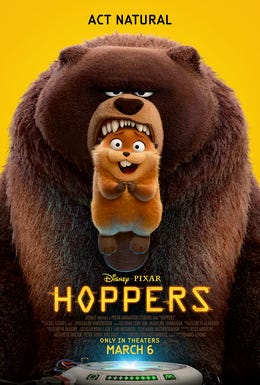
Hoppers is the latest addition to the Pixar-verse. It tells the story of Mabel Tanaka, a Japanese-American girl who transfers her consciousness to a robotic beaver to aid the animals in defending their glade from a mayor trying to build a highway. (There’s a line of dialog where one of the characters comments on the similarity to James Cameron’s Avatar.)
This seems like a straightforward tale of “nature good, building public infrastructure bad,” and so predictably many have characterized it as Pixar’s NIMBY film.

However, I don’t believe this is a NIMBY film. In fact, it may be the opposite, but not along the axis that YIMBYs hope for.
What is Hoppers (not) actually about?
It’s totally fair for people to be confused about what Hoppers is actually about, because it misleads its audience from the very opening minutes.
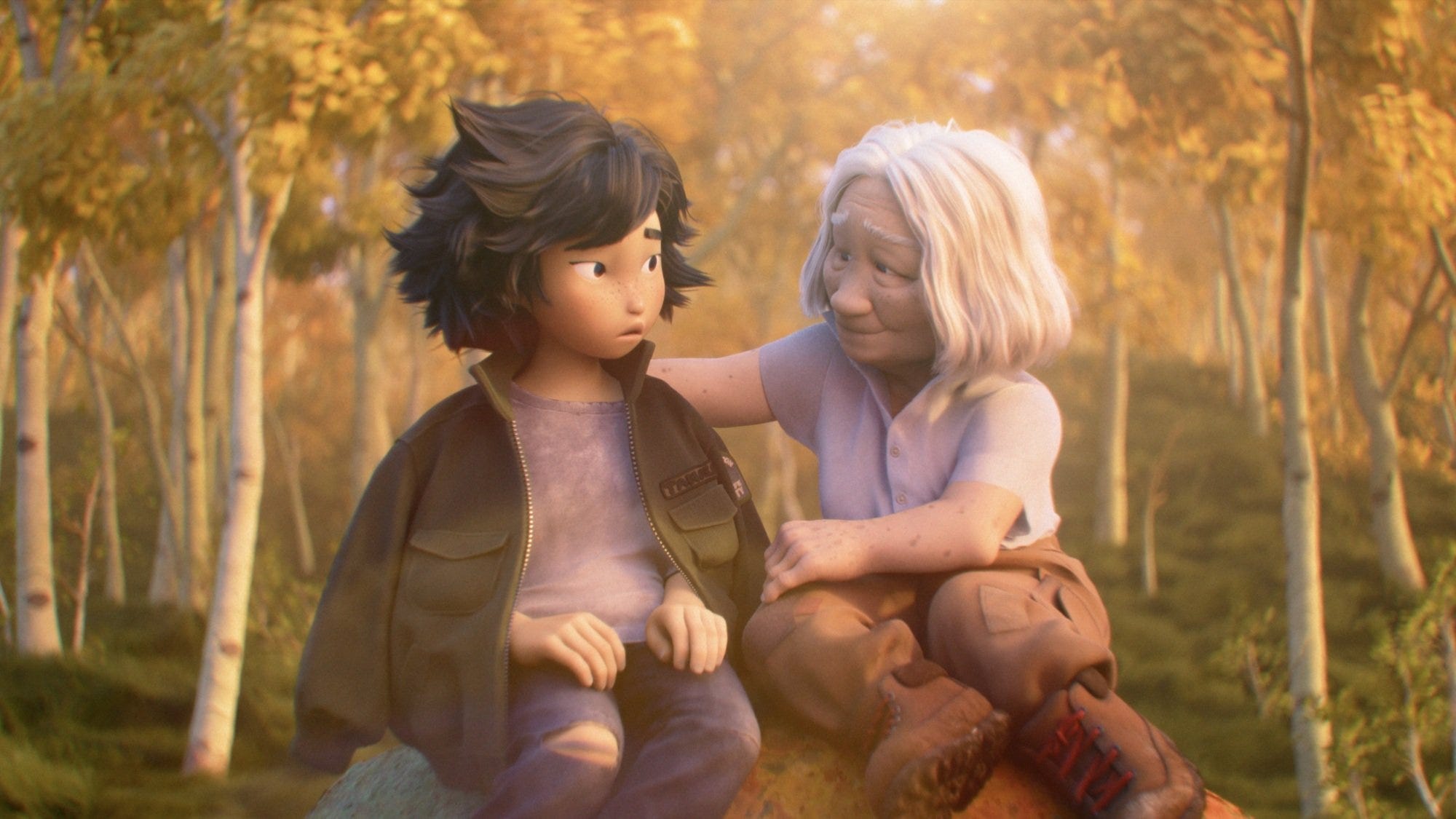
The opening uses Pixar’s characteristically excellent visual storytelling to tell the tale of a rebellious animal-lover growing up, and the way granddaughter and grandmother bonded over their shared love of nature in the grandmother’s final years. It’s the sort of sequence that Pixar is known for being unfairly good at.
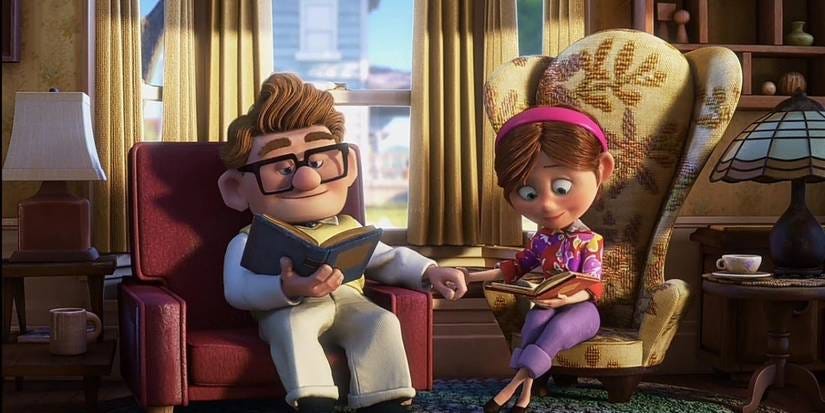
It genuinely felt like the movie was trying to teach me in its opening minutes how to watch it: “this is a story about family, and legacy, and intergenerational love.”
But what we get instead in Hoppers is a political fable where the one character who cares at all about family is a villain: the movie’s only subsequent interest in kinship is kin-favoritism taken to its ugliest extreme in the form a hereditary ruler from the insect world, an insect supremacist who wants to subjugate all non-insects.
This is a big swing for a children’s movie. Hoppers does not try to “play things safe.” I admire that kind of creative courage, but it also results in a story with moral logic that is utterly insane.
Anthropomorphic animals are people, except when they’re not
In any movie about anthropomorphic animals, there’s always the question of how much the animals should remain, well, animals.
Zootopia, despite being a movie that is centrally about the role of predators in society, somehow manages to completely sidestep the question of what Zootopia’s predators actually eat. Hoppers does not hide from this uncomfortable question.
One of our most memorable supporting cast members is a brown bear, and our protagonist Mabel first encounters Ellen the bear at meal time, with the meal in question being a oafish beaver named Loaf.
Mabel is understandably upset, but neither of the animals is bothered by this state of affairs. Ellen the bear and Loaf the beaver do their best to explain to Mabel that this is just how things work in the animal kingdom: the beaver is mostly resigned to his fate.
Both prey and predator are under the domain of the monarch of mammals, a beaver named King George, who patiently explains to Mabel how things work around here:
King George: Pond rule #1: Don’t be a stranger. It’s harder to be mad at someone if you know their name. Lookin’ good, Ron! You too, Fran, Tom, Kwon, Rosie, Tamara, Prudence, Maddy…
This continues, with King George going on to offer greetings to Petey and Peter (both ants) and Sasha and Kat (both fish), with one of the fish offering a greeting:
Steve the fish: Oh, hey there, George!
King George: And hello to you, Steve!
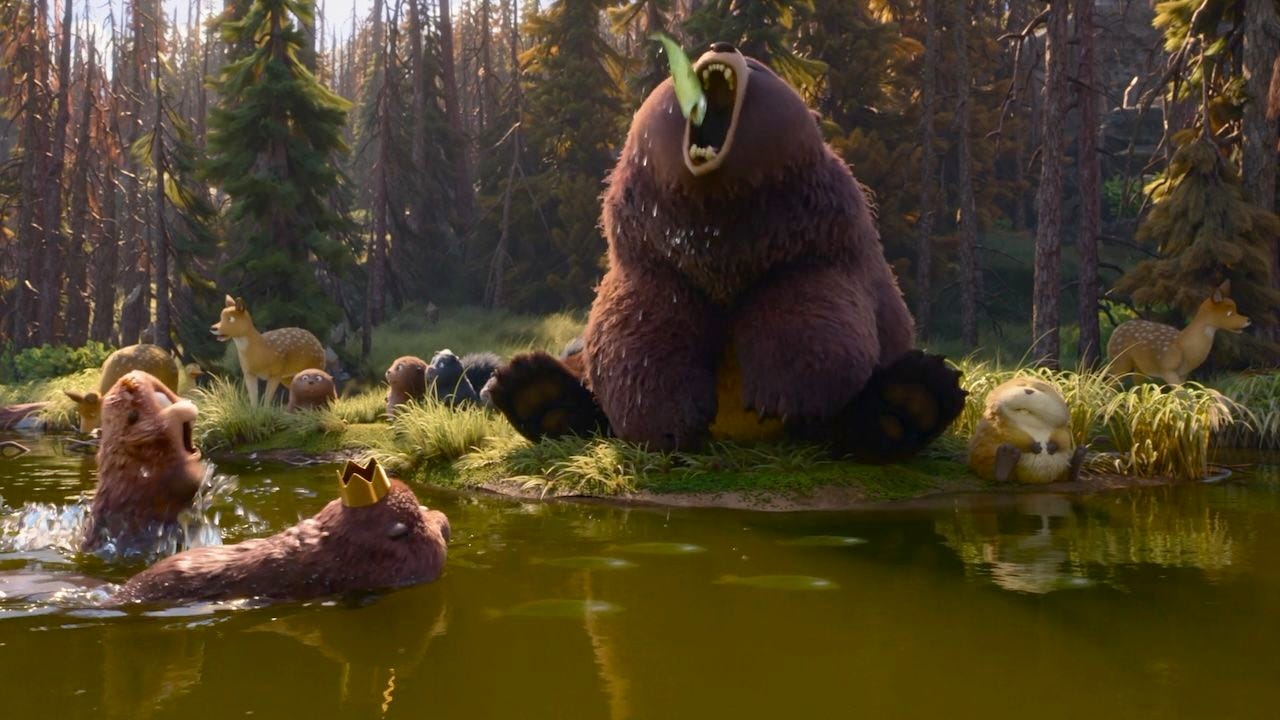
(Ellen proceeds to eats Steve. This is not interrupted.)
King George: That’s pond rule #2: When you gotta eat, eat. Pond rule #3, we’re all in this together!
Mabel: How is that a rule?
King George: Well, it means that no matter who you are, you look out for others who need looking out for. There, pond rules!
If we’re to treat the sapient talking animals as moral patients, then one of our main characters is a murderer, as is every predator in the film, and multiple acts of murder throughout the story are framed as comedic beats. At one point, we see a sapient creature’s guts smeared on a wall as a punchline. The film seems to realize the insanity of its own moral logic, and offers a shrug and “eh, what can you do?”
Hoppers wants its animals to be people, but it also wants nature to be nature, and these two frameworks are in open war with each other for the entire runtime. There are no “safe targets” here for an obligate carnivore. Even ants, caterpillars, and butterflies are sapient creatures.
Once the film grants the animals personalities, families, dreams and ambitions, and political communities, once even insects are sapient creatures, it loses the ability to retreat into “well, that’s just nature.” What we’re seeing here is a society in which people are routinely murdered, and everyone is just okay with that!
So who are the good guys?
To make things stranger, the supposedly villainous humans are not particularly bloodthirsty by the standards of this universe.
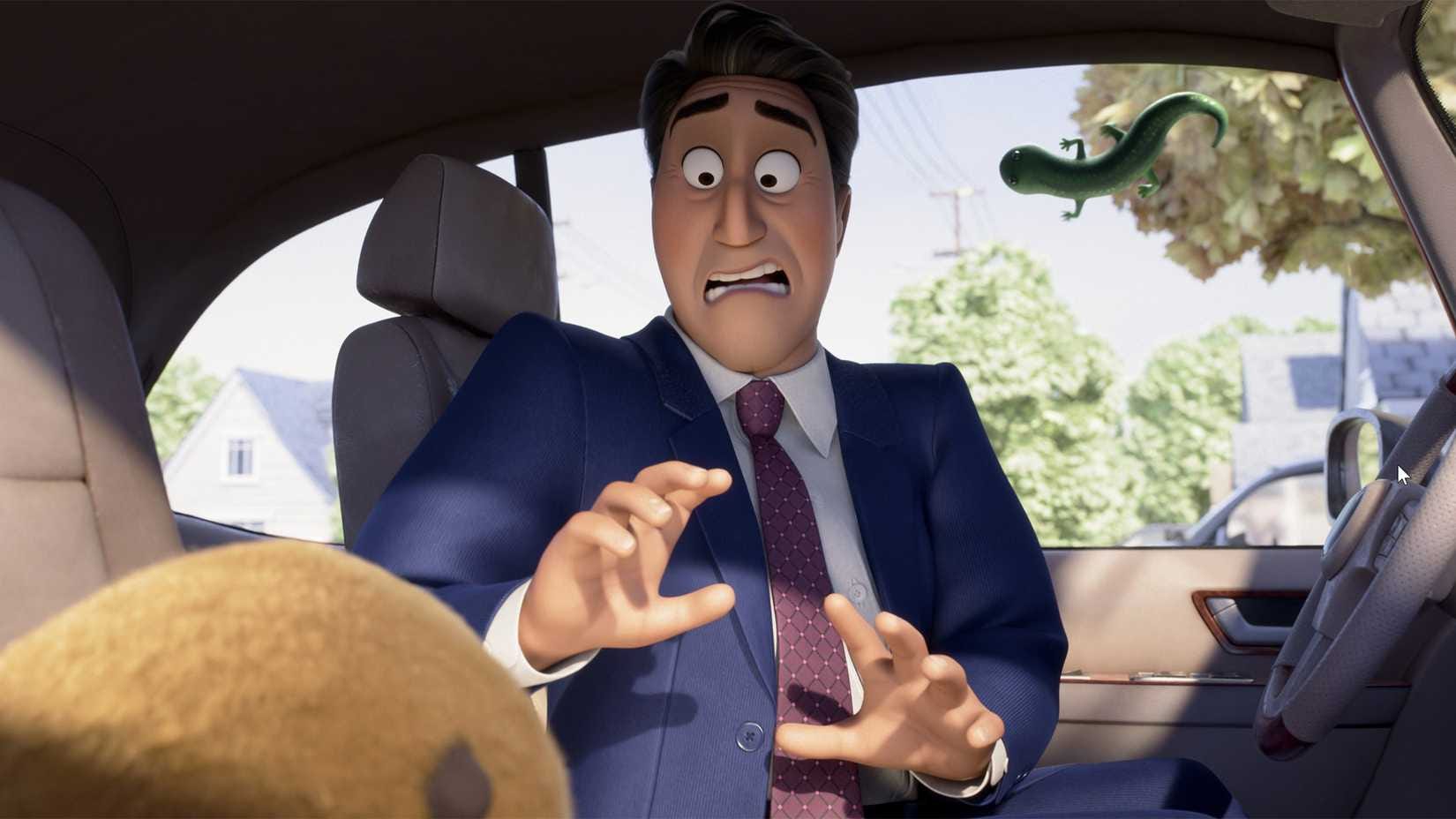
The humans are led by Mayor Jerry who serves as one of the central antagonists. The mayor’s new highway plan is destroying the animals’ natural habitat, but the humans scrupulously avoid any direct violence: the humans come up with a sound-based technology that drives the animals away, allowing them to bulldoze parts of the habitat without killing a single sapient creature.
So, to recap: the film’s moral logic is that the more humane world must never be allowed to expand into the less humane one. The murder-filled nightmare world of animal society must be preserved at all cost.
Regression to the cruel
It is not lost on me that one of the central “good guys” that we’re asked to root for is a monarch literally named King George, and his antagonist is a democratically-elected American.
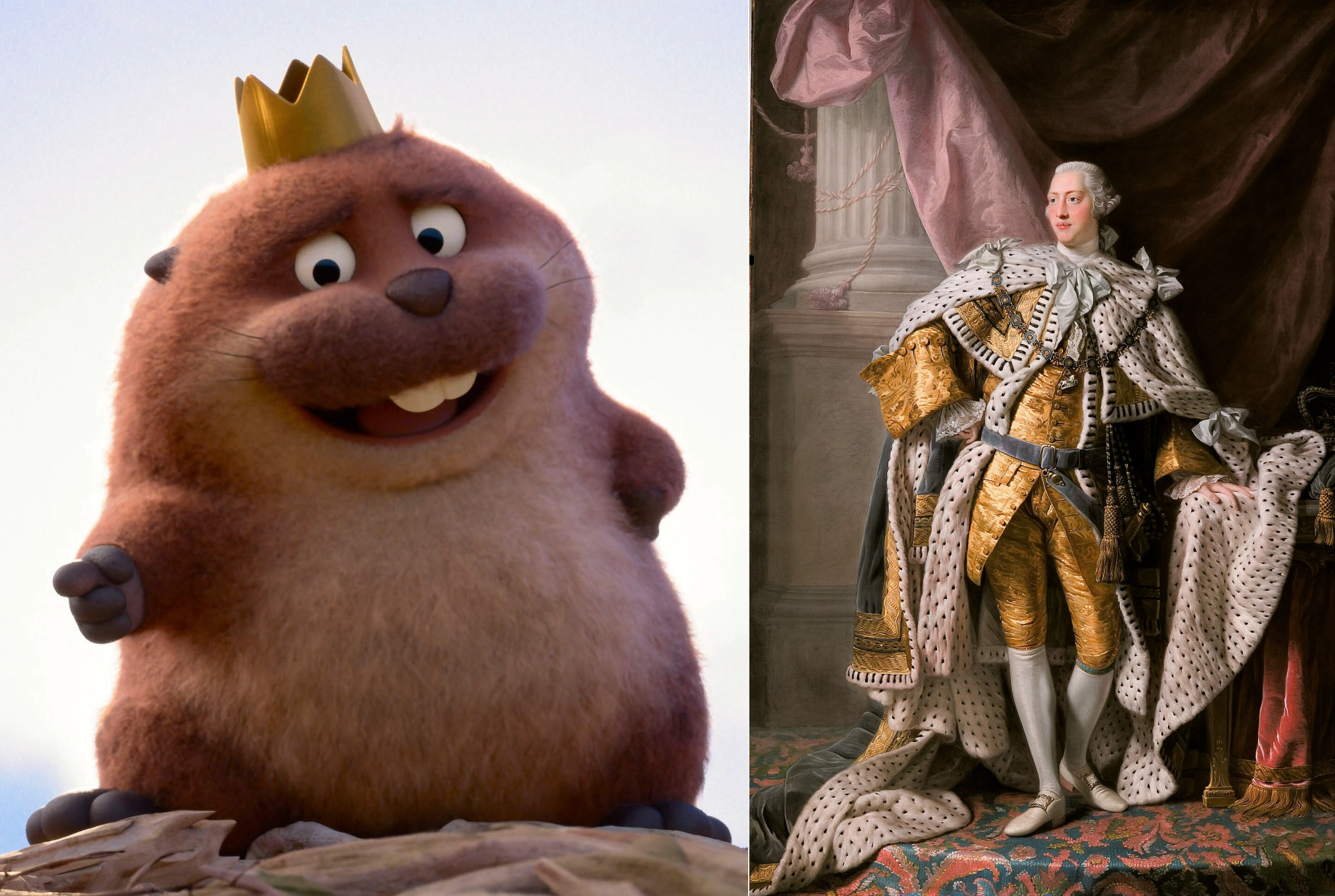
This makes Hoppers among the most reactionary children’s film I’ve seen in a while. The antagonist is a democratically elected mayor who is carrying out the wishes of his constituents. The film doesn’t want us to miss this point: we’re repeatedly shown how much the voters love Mayor Jerry. By contrast, Mabel’s petition to save the glade is so unpopular that she can’t even get a single signature.
But Mayor Jerry gets a redemption arc in the end. How does this democratically-elected leader redeem himself? By becoming a political strongman who overrules the will of the electorate by canceling his immensely-popular plan for a highway. In other words, by behaving more like one of the animal monarchs, who are the real legitimate rulers in this world.
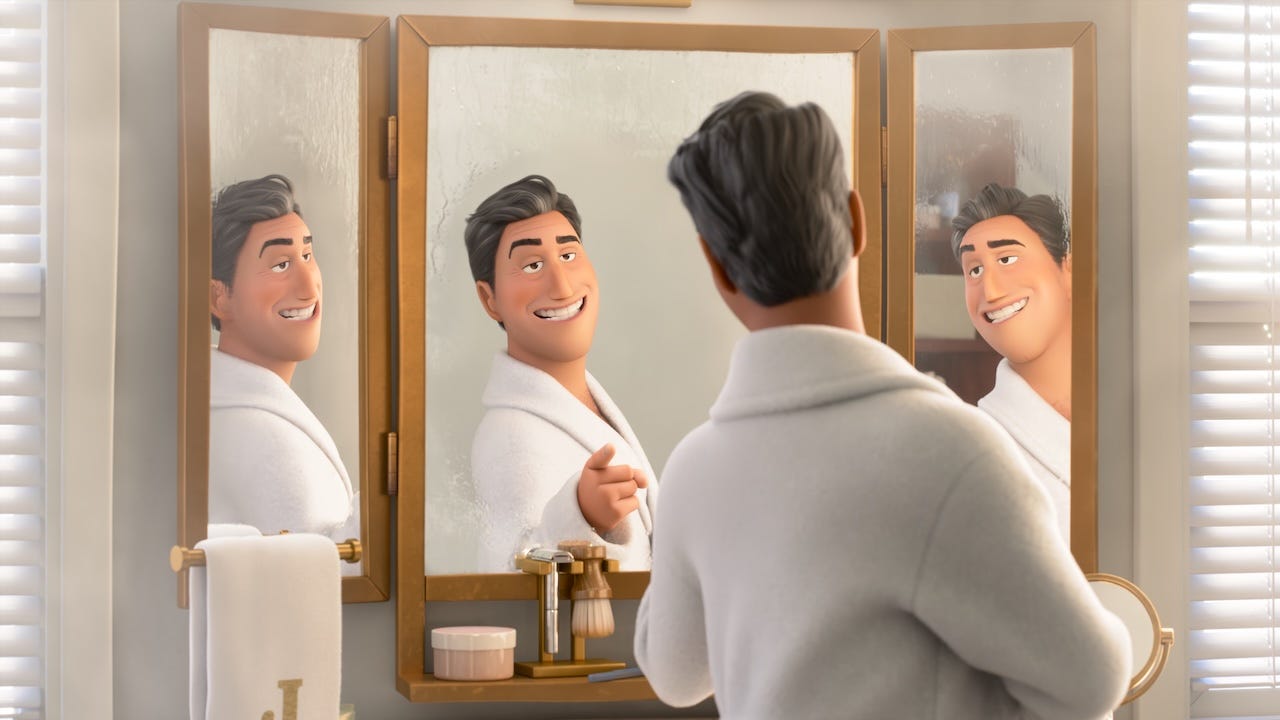
In a world full of “eat the rich” movies, this film bravely runs in the opposite direction with a bizarrely premodern vision: the problem with power is not that it is too concentrated, but that it is being exercised by weak men, and the solution is the emergence of a Good King. For an evil mayor to stop being evil and become great, he must realize that his true destiny is to be a King.
NIMBYs vs democracy
It’s at this point that Hoppers might seem to be most NIMBY: in the end, the mayor ignores the will of the electorate, and capitulates to the will of a single determined community member.
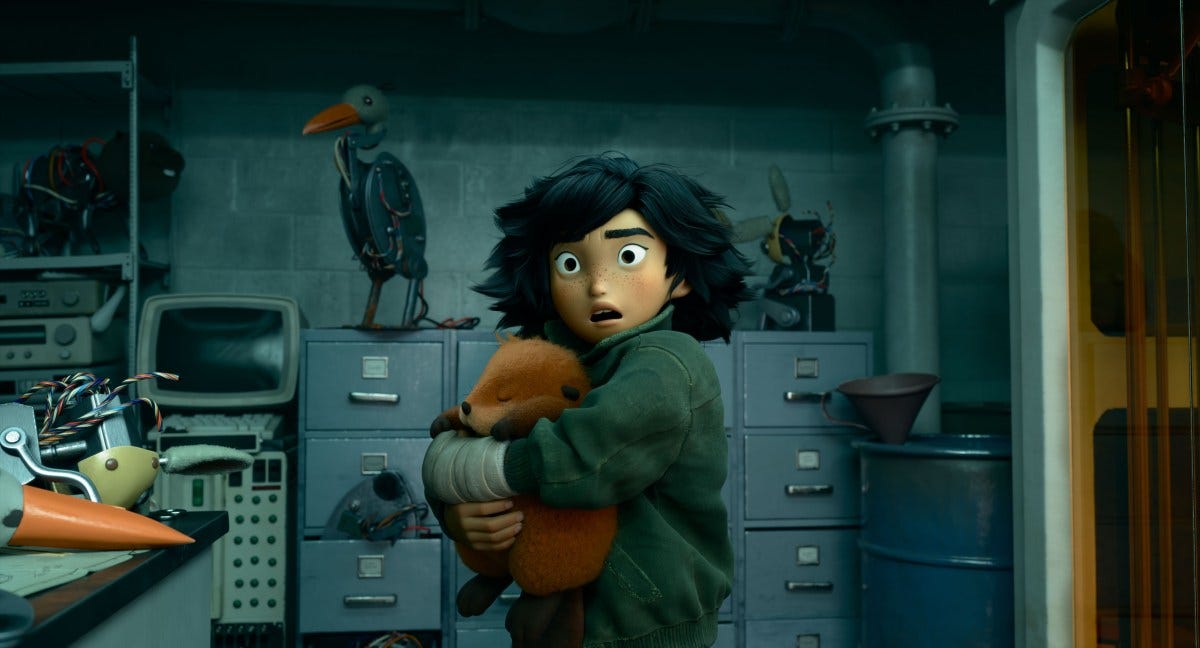
However, Mabel Tanaka is no NIMBY.
Hoppers is utterly uninterested in what is perhaps its most interesting moment: in an early showdown between Mabel and Mayor Jerry, our protagonist tells the Mayor that the highway he’s building is “illegal.”
However, when Mabel declares that the builders’ actions are “illegal,” she mean this only as a synonym for “evil,” because the political imagination of this film does not have room for the concept of courts or the rule of law. Despite the rules ostensibly being on her side, Mabel doesn’t seek any form of institutional redress. Her only option is to physically block the construction site, standing on explosives and daring the construction crew to blow her up. (This action by Mabel is also illegal, but she doesn’t seem to have a problem with that.)
Even when the antagonist is doing things that are “illegal,” this film refuses to consider the possibility that law or procedure might have any role in stopping him. This movie might be anti-growth, but it can’t borrow a single move from the NIMBY playbook. This film is not NIMBY enough to believe in the existence of environmental review boards.
Verdict
This film is exquisitely made and brimming with charisma, and it is all in the service of a story that feels politically deranged and either morally incoherent or morally horrifying.
Those qualities often make it hilarious: almost every moment that I describe above as a moral atrocity got a laugh out of me in the theater. The thing I hate to experience most when I sit in a movie theater is boredom, and Hoppers is the complete antonym of boring. It gave me an unforgettable afternoon at the theater.
Update: Several readers have noted that in my analysis, I neglected to address the “twist villain” of Hoppers, so I’ve written a follow-up post to answer these questions: is our main character actually a murderer? Did the homicidal Insect Prince have a point when he advocated for killing all mammals?

I think this take doesn’t work. The only way you can reach the conclusion that the film is in favor of monarchical decision-making is to do what you do here: ignore the actual villain of the movie, Titus the caterpillar. Notice that what makes George stand out as a heroic figure isn’t that he’s a king; there are six other kings in the movie, seven if you count Jerry, whom the animals call “the human king” for good reason: just like the insect king and the fish king and the others, he looks out for his people’s interests and ignores all others. What marks George as admirable is that he’s the only king who DOESN’T do this, who insists on community and mutual cooperation. The triumph at the end of the movie is that all the monarchs, and the animals they command, work together, seeing each other as part of a whole.
Jerry was democratically elected, but only by humans; the animals got no representation, even though they’re just as affected by his actions. What the movie suggests is that this isn’t as democratic as true cooperation is. You can certainly disagree, but that’s the actual argument, not just a paean to benign dictatorship.
I liked Hoppers but you've nailed its moral chaos. The animals aren't living in harmony, they're in a feudal monarchy. The humans aren't even killing anyone, they're building a road. There is an easy message about environmentalism but Pixar fumbles it.