
Why Costco pays $30/hr and Target doesn't
Costco is built different
Costco’s minimum “starting wage” is $20 per hour, with the average being $30+ per hour.
For comparison, Target’s lowest starting wage is $15, and Walmart’s starting wage is $14, with the average hourly wage for Walmart associates being $18.50. (The average Walmart associate makes less than the least experienced Costco worker.)
Yet despite paying their employees more, Costco is also famous for having low prices. How do they do it? Costco keeps costs low in several non-obvious ways:
Costco is not trying to stock everything
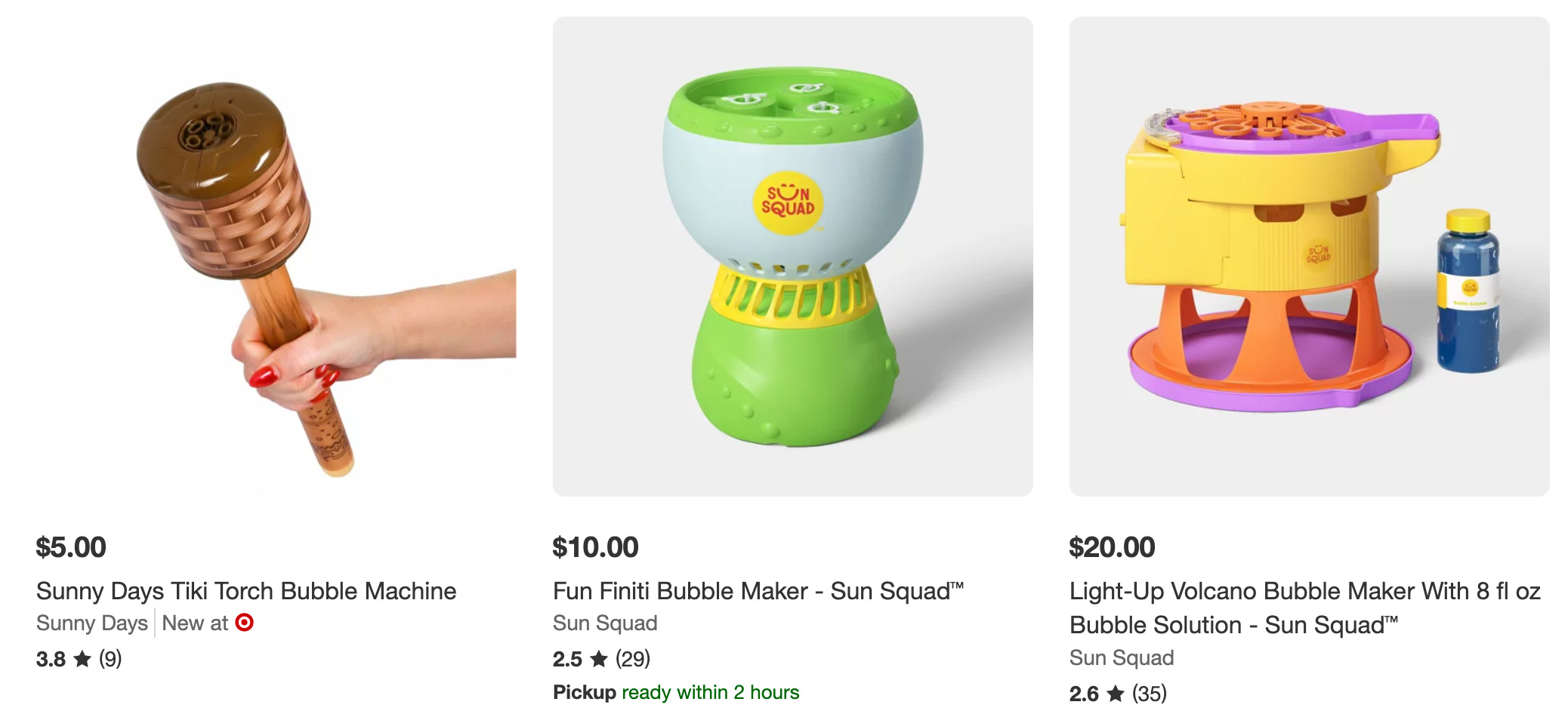
Walk into a Walmart and you’ll find over half a dozen ways to buy regular Coca-Cola: you can buy 12 oz cans, 16 oz bottles, 20 oz bottles, and 2-liter bottles. The cans come in 12 packs and 24-packs, and that’s before we’ve touched Diet Coke or Coke Zero.
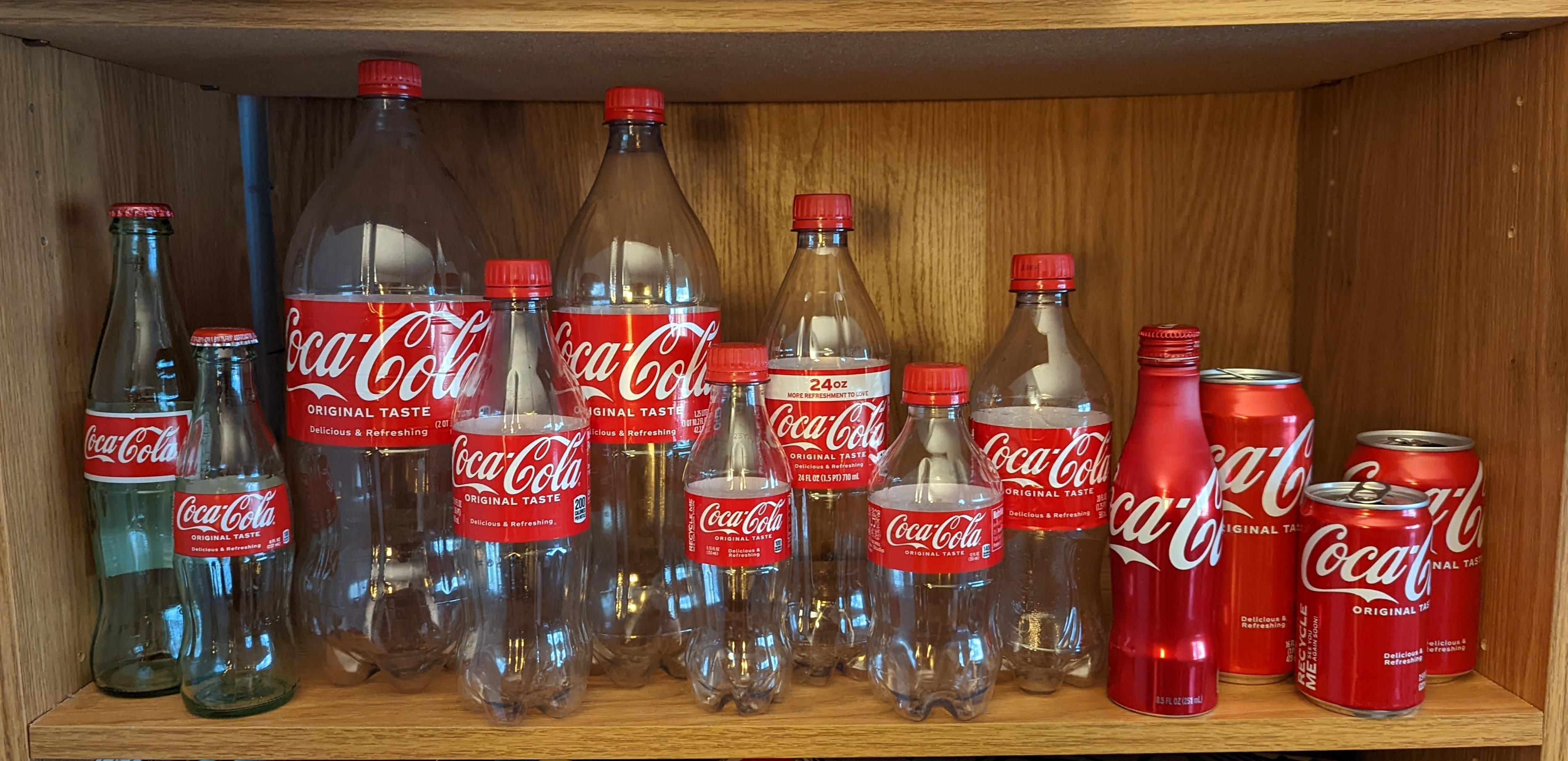
Each of those is what retailers call a “stock-keeping unit” (SKU), each of which has to be treated by the inventory system as a distinct product.
An average Target caries around 80,000 SKUs, while a typical Costco carries only 4,000 SKUs, a 95% smaller catalog despite Costco’s retail locations being physically larger than Target’s by around 18%.1 Costco has more items in their warehouse, but less variety. They just identify the most popular SKUs and sell more of them.
Target tries to have “a little something for everyone,” and that imposes costs on the business. If a SKU is obscure or unpopular enough, it might never get bought, winding up as “dead inventory.”
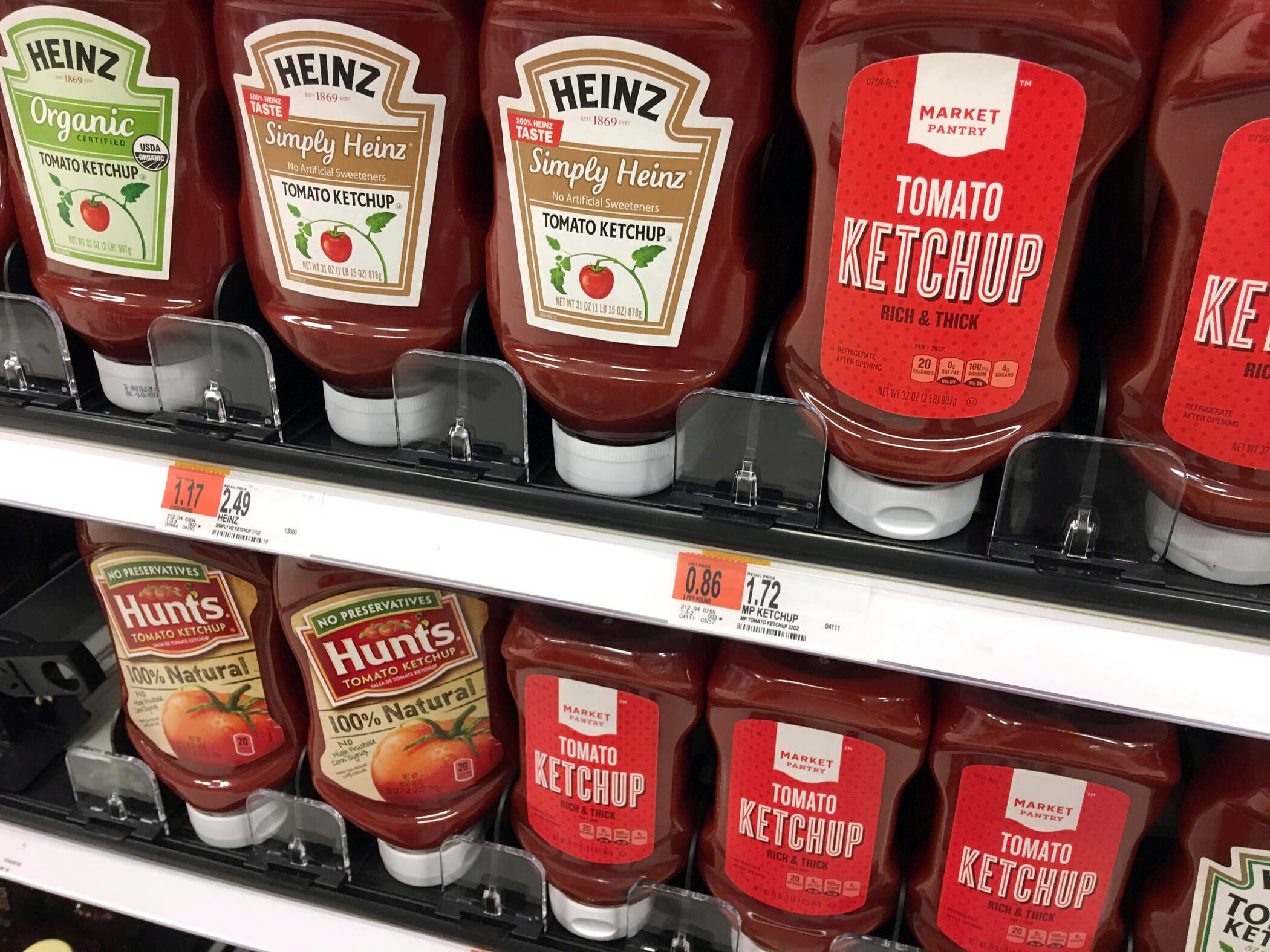
When you have 10 varieties of ketchup, maybe you never manage to find a buyer for the last two bottles of the least-popular kind. Even if it does eventually sell, it might sit on the shelf for a long time before someone buys it.
Costco avoids this problem by selling fewer kinds of ketchup (and fewer varieties of everything else, too). There are fewer “unpopular items” that spend time languishing on the shelf.
This “fewer SKUs” approach has many other benefits for Costco:
Costco’s “No Touch Policy”
Fewer SKUs means lower operational and labor costs.
Much of Target’s labor cost is paying employees to stock shelves. Look at this photo of a Target employee physically bending over to place an item on the shelf:
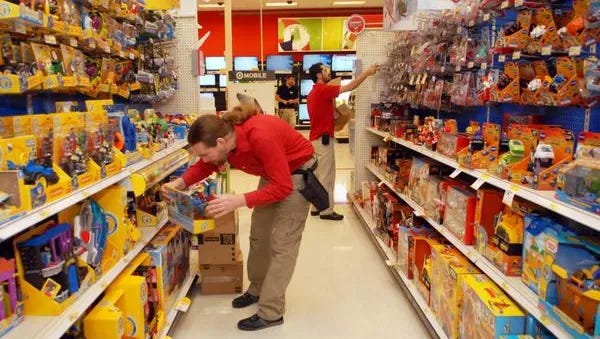
I can report from my experience as a young Target employee that this process is as laborious and inefficient as it looks. Note the brown corrugated cardboard boxes next to the employee: those are the boxes that the product came in. After he’s done shelving the product, he will need to flatten the cardboard and dispose of it.
Costco’s more efficient restocking method has a name: the “no touch” policy, where products are placed directly on the sales floor without being unpacked. You’ve probably seen this before: an employee drives a forklift out to the sales floor, drops off a pallet, maybe takes an empty pallet back with them, and heads back without ever disembarking from their forklift.
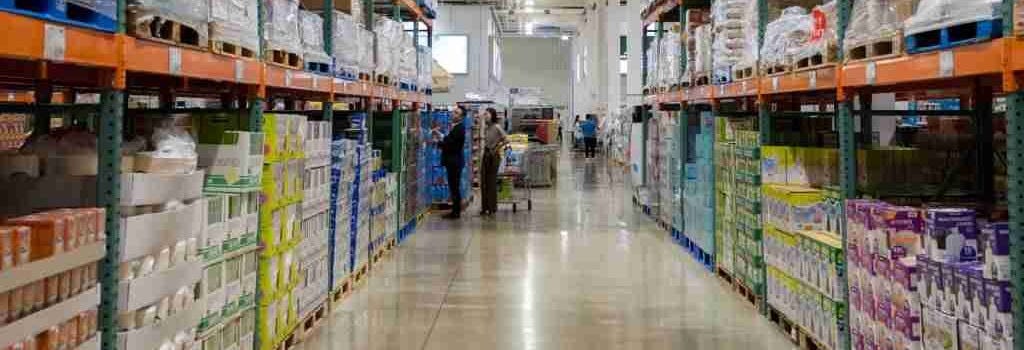
There’s no Costco employee who has to “arrange the merchandise on the shelf” to make it look nice, because there aren’t shelves within reach of the customer.
Why can’t Target use this same high-efficiency method? They have more SKUs.
Because Target has “a little something for everyone,” most Target SKUs don’t occupy a whole pallet, which is why you might need to have an employee make a trip to stock 6 more bottles of Habanero Ketchup.
But having fewer SKUs is also great for financial reasons, too:
Faster inventory turnover means fewer costs
Because Costco only stocks popular SKUs, their inventory moves faster. (Think about what is implied when we say a product is “flying off the shelves”: it’s literally spending less time sitting on the shelf!)
Shelf time is costly: the retailer has to pay rent, utilities, security, and all the other overhead that comes with maintaining the physical space a product occupies. A product that sits on the shelf for 15 days before being sold is far more costly than an item that gets bought within 2 days of hitting the shelf.
Target, with 20 times as many SKUs, carries far more slow-moving inventory that lingers for weeks before anyone buys it.
Faster inventory turnover is better for the balance sheet
Getting paid sooner is better.
Making $1 in January is better than making $1 in February because of inflation and everything else implied by the time value of money. Every extra day that an item sits on the shelf before being sold is a day that it’s losing value in real terms.
Suppliers typically get paid on “Net 30” or “Net 60” terms, where that the retailer pays the supplier 30 or 60 days after receiving inventory. The suppliers are essentially extending the retailer an interest-free loan. (This is something Dan Davies described in his book Lying for Money, and which I summarized in my book review; see the “Long Firm” section of the review which describes supplier credit.)
Consider what a “Net 30” agreement means in practice. If Costco takes 30 days to sell an item, then the customer payment arrives right when the supplier’s bill is due, so it’s a wash. If Costco takes longer than 30 days to sell an item, then Costco has to pay the supplier before a customer has paid them for them, which can result in cash flow problems.
But it’s possible to have the opposite of “cash flow problems.” If Costco sells the item on day 2, they still don’t have to pay the supplier until day 30. That’s great news for Costco, who is getting an interest-free loan for 28 days!
Any retailer can benefit from this, but Costco benefits more than other retailers because they stock fewer SKUs and thus have faster inventory turnover.
Some inventory depreciates on the shelf
We already know that a dollar in January is worth more than a dollar in February. But sometimes the value of an item on the shelf goes down in nominal terms, not just real terms.
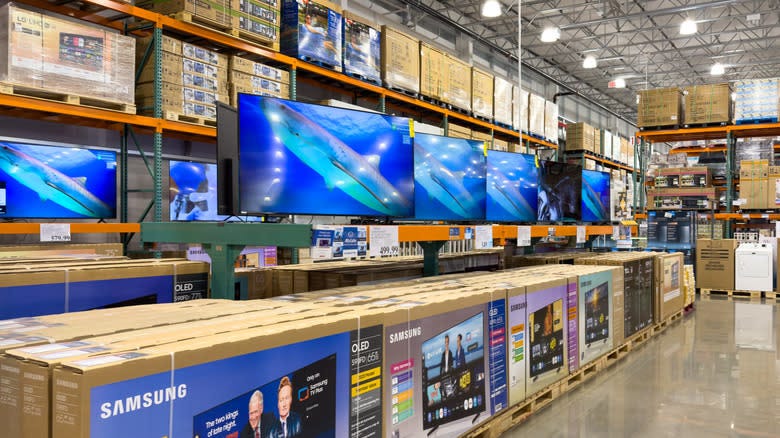
This is most obvious in electronics: now that the iPhone 17 is out, you can get the iPhone 16 for cheaper than it originally retailed for. Likewise, a fancy new OLED TV will gradually become worth less over time. That new TV loses value the longer it sits on the shelf. So, once again, Costco’s approach of “stock fewer SKUs, get faster turnover” is preventing a type of loss.
Fewer SKUS means bulk discounts
This is probably intuitive and obvious to most people, but just as you can save money by “buying in bulk” from Costco, Costco can save money by “buying in bulk” from their suppliers.
The boring part: Costco has membership fees
This is among the most boring and obvious reasons for Costco’s success relative to other retailers, but it bears mentioning. Costco charges an annual membership; you need to have a membership card to enter. Two points downstream of this:
Membership fees are over half of Costco’s operating income
In fiscal year 2024, membership fees were roughly $4.8 billion out of $9.3 billion in operating income. Even if their entire inventory were sold with zero margin, they would still be profitable!
There’s less shoplifting
Shrinkage at most retailers is around ten times higher compared to Costco. Average retail shrinkage is 1.6%, compared to 0.1-0.2% at Costco. (Shrinkage is admittedly inclusive of damaged and spoiled inventory as well as theft, so some of this is downstream of Costco carrying fewer perishable items than a Walmart with a grocery section.)
Costco having an order of magnitude less shrinkage is a really big deal. If 1.6% shrinkage seems like a “small number” to you, consider the size of net retail margins: Walmart has a net profit margin of 2.5%, Costco's is 2.4%.
Here’s a toy example to illustrate just how bad shoplifting hurts businesses:
Consider a hypothetical retailer that has 5% net margins if we consider everything except shrinkage. For this hypothetical retailer with a 5% margin (“net except for shrinkage”), that means that when they sell a frozen pizza for $10, their total cost is $9.50. That’s a profit of 50 cents per pizza sold.
But if someone steals a frozen pizza off the shelf, they lose $9.50. In other words, when one pizza is stolen, they need to sell 19 more pizzas just to break even!
Target and Walmart can’t copy the things that make Costco good
Costco is in the business of charging annual membership fees, and they stock fewer SKUs: they’re not trying to have “a little something for everyone.”
That means that Target and Walmart can’t decide to “just run things more like Costco.” It would upend their entire business model. Even though Target and Costco might seem like similar business models (they’re both really big retail stores), they operate on fundamentally different business logic.
Costco generates over twice as much in annual revenue per employee compared to the average supercenter retailer, but that’s not because Target employees are “working half as hard” as Costco’s employees; it’s because the pallet-based, fewer-SKU model means that each Costco worker is doing fundamentally different (and more productive) labor.
Costco’s more productive labor
Costco’s workforce is composed of fundamentally different types of labor than that of Walmart or Target.
All of these companies file EEO-1 reports with the federal government that sort employees into broad categories.2
Let’s compare “Operatives,” which the federal government defines as including forklift operators and other equipment/material-handling roles: what percent of each company’s workforce is this specific kind of specialized labor?
Costco: 16.2% operatives
Walmart: 2.6% operatives
Target: 0.35% operatives
Let’s also look at the category of “Laborers & Helpers,” which encompasses manual handling roles (warehouse-ish work).
Costco: 27.9%
Walmart: 6.4%
Target: 6.3%
If you’re wondering what all those Walmart and Target employees are doing if they’re not driving forklifts or providing warehouse labor, most of them are in the “Sales Worker” or “Service Worker” role. These encompass cashiers, counter workers, and the floor associates greeting any customer who steps within 10 feet of them, stocking shelves 6 ketchup bottles at a time: this is 82.4% of Target’s workforce, 75.7% of Walmart’s, and 35.6% of Costco’s.3
Costco’s workforce looks different because they have built an entirely different kind of retail machine, one with less shelf-tidying and more pallet-moving. It works well for a warehouse club that only stocks 4,000 SKUs per location. But when you want that Habanero Ketchup, you’ll have to plan a Target run.
You might also enjoy:

Typical Costco size: ~147,000 sq ft, typical Target size: 125,000 sq ft, though they do have small-format locations that are closer to 40,000 sq ft and “SuperTargets” that are ~175,000 sq ft
Note that companies are required to file an EEOC report every year, but they’re not required to publish every year, so I’m relying on the 2018 Costco report and comparing it to more recent data from Walmart and Target. The data doesn’t vary much year-to-year, so the stats still paint a fairly accurate picture of the status quo.
Perhaps one reason for that increased need for checkout labor is that Walmart and Target have to deal with a larger number of smaller purchases: according to BI, the average Costco trip is $100, while the average Walmart visit is $50 and the average Target run is $54. The average Walmart customer is spending around the same amount per year as the average Costco shopper ($3000/yr), they’re just doing it across more trips.
Interesting to not mention Costco’s union strategy. Every time a Costco is successfully organized and win a union election, they give raises across the board in order for employees at different locations to not unionize. Workers organizing has been a strong push in how Costco treats their employees.
There as been a lot of dunking on Hasen's pro-shoplifting take, but this article is the best of all of them.