Epistemic status: fiction, hopefully
We’re excited to announce the launch of the a16z Moral Innovation Fund, a new $1 billion vehicle dedicated to an overlooked frontier in technology: the systematic monetization of behaviors that have historically been constrained primarily by norms, stigma, and the spirit of the law. As software continues to eat the world, we believe ethics will follow the same trajectory as everything else, becoming unbundled and abstracted.
In many of the most valuable markets of the last decade, outsized returns accrued to teams who realized that moral discomfort often indicates an underpriced asset or a mis-specified regulation. Moral Innovation is about finding these pockets of “values whitespace” and backing the companies that can scale them.
Below is a sample of portfolio companies from our first Moral Innovation Fund cohort, illustrating the kinds of category-defining businesses we believe will shape the next decade of value creation.
Habit Formation Lab
STEM education platform focused on applied phytochemistry for youth. After completing a 30-minute training seminar on plant biology, dosage, and harm reduction, students ages 13 and up can enroll as junior research associates and obtain research kits containing small quantities of botanicals (including cannabis, nicotine, and related derivatives), which can be shipped under existing lab-supply exemptions.

All experiments must be logged in the HFL app, which prompts users to record subjective effects, side effects, and peer reactions. The resulting dataset, offering granular consumption patterns and psychometric self-reports from the 13-17 demographic, is licensed to pharmaceutical, CPG, and ad-tech partners interested in “early-lifecycle consumer behavior.”
HFL positions itself as hands-on science education, operating in a regulatory niche closer to chemistry sets than dispensaries. The company captures both direct revenue from “lab membership fees” and high-margin data revenue from insights into an otherwise opaque underage market.
Alibify
Marketplace for “delegated presence.” Users schedule stand-in sessions where a screened contractor carries their phone (or a paired device) along a pre-planned route while the client is physically elsewhere. The app records high-fidelity location logs and stores them in a tamper-evident archive suitable for later export to employers, spouses, insurers, or courts.
Phones have become primary witnesses in criminal investigations and civil disputes, but individuals lack tools to proactively manage that evidentiary trail. Alibify democratizes access to location logging, letting users separate where their body is from where their data later says they were, all within existing consent frameworks for location sharing. Counsel’s view is that the platform “does not fabricate records, it merely orchestrates legitimate collection of geodata,” leaving questions about why a user arranged for a proxy to carry their phone to be resolved between the user and any interested authorities.
Draft Prince
Draft Prince is an applied probability literacy platform that embeds sportsbook mechanics into middle- and high-school curricula while staying in compliance with gambling laws in all 50 states. Students make structured predictions on real sporting events, including moneylines, spreads, prop-style questions, and are scored on calibration and accuracy.
Draft Prince creates a clean technical separation between minors and sportsbook operators: the minors interact only with an “educational assessment tool” and a scholarship charity; the sportsbooks interact only with a pool of performance data and a 501(c)(3) that converts credits into grants or prepaid cards.
Legally, Draft Prince positions itself as standards-aligned edtech plus a scholarship-routing engine. For partners, it functions as a long-term acquisition funnel that pre-trains an entire cohort in sportsbook UX, profiles their risk preferences years in advance, and ties brand goodwill to the moment they first withdraw their credits as spendable money.
Related reading/inspirations:
Fellow Inkhaven resident Linch beat me to this one:

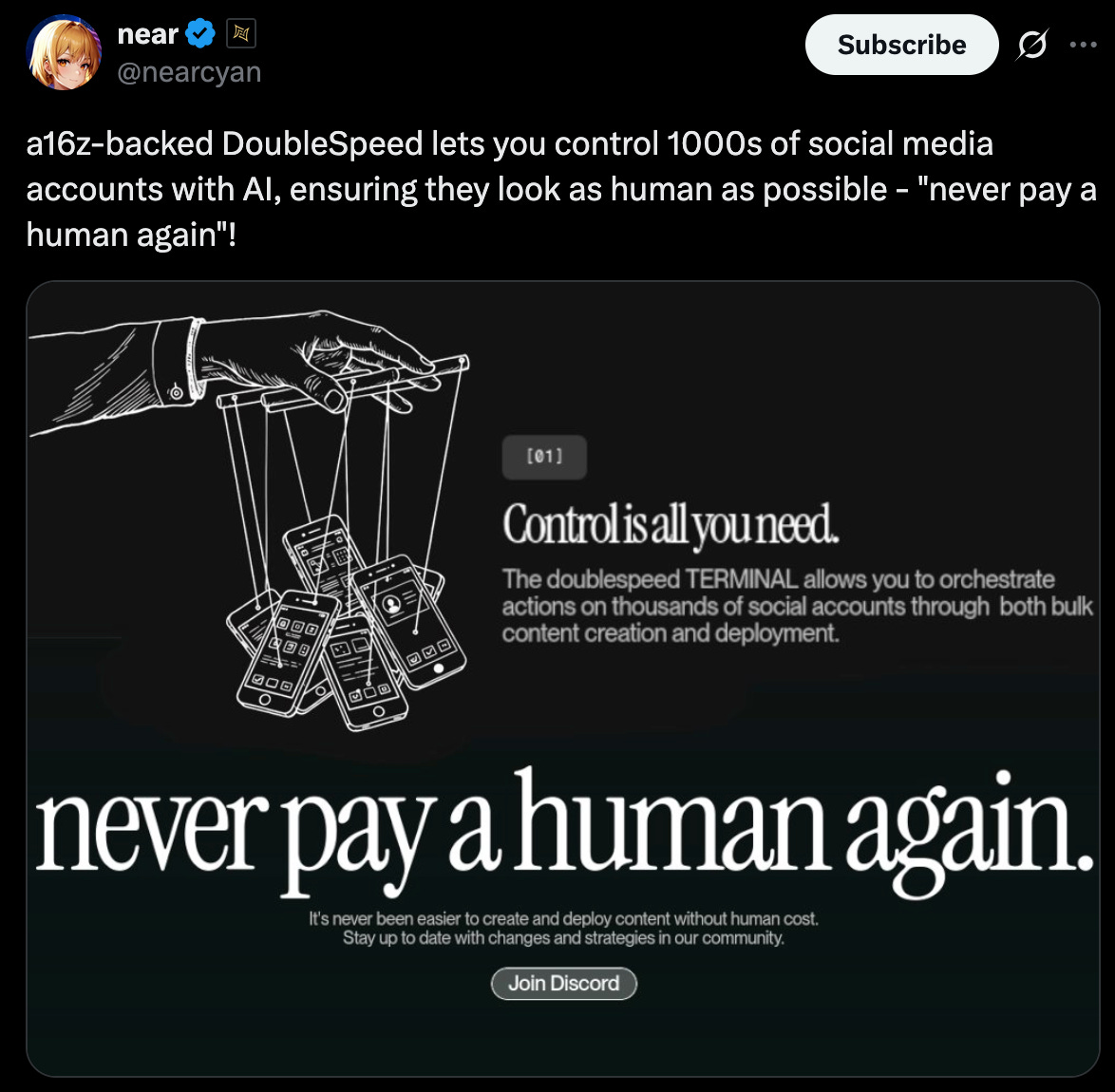
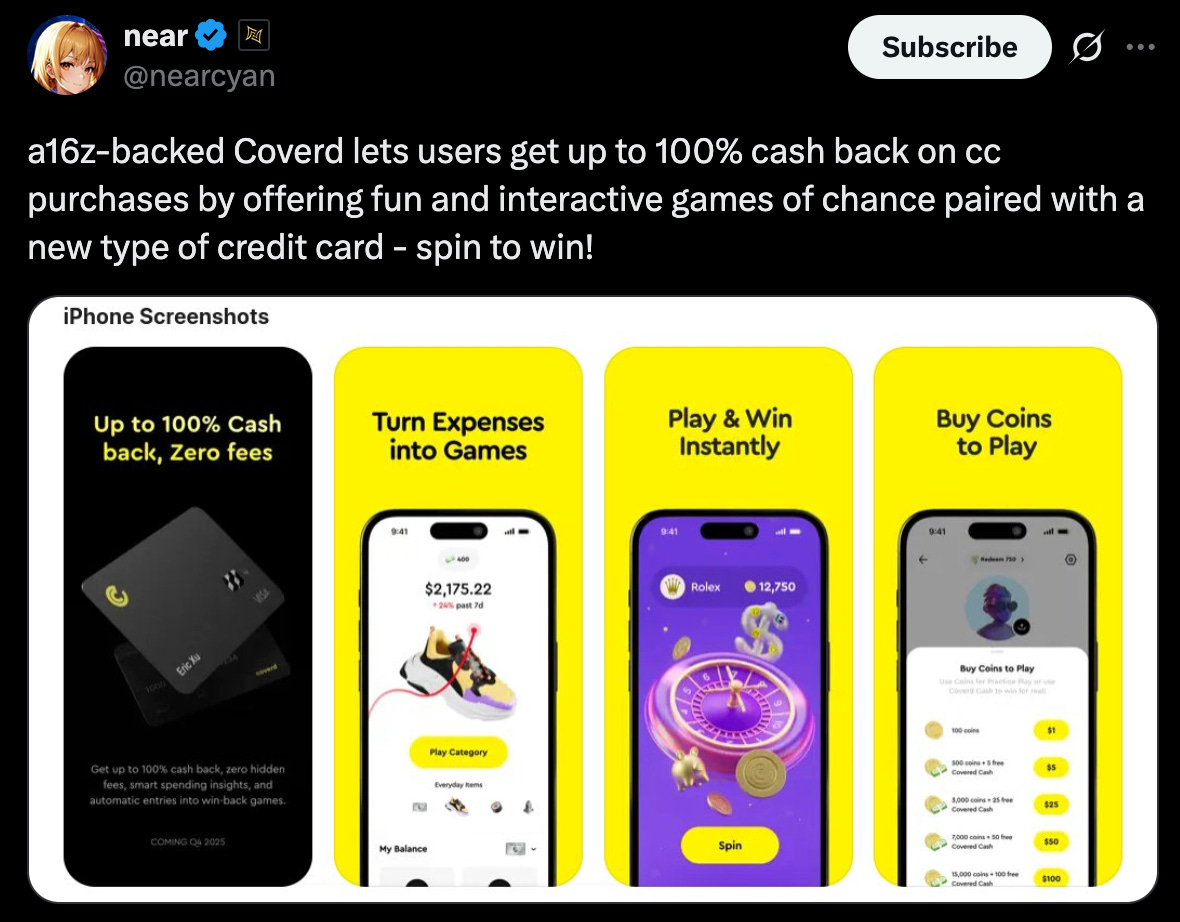
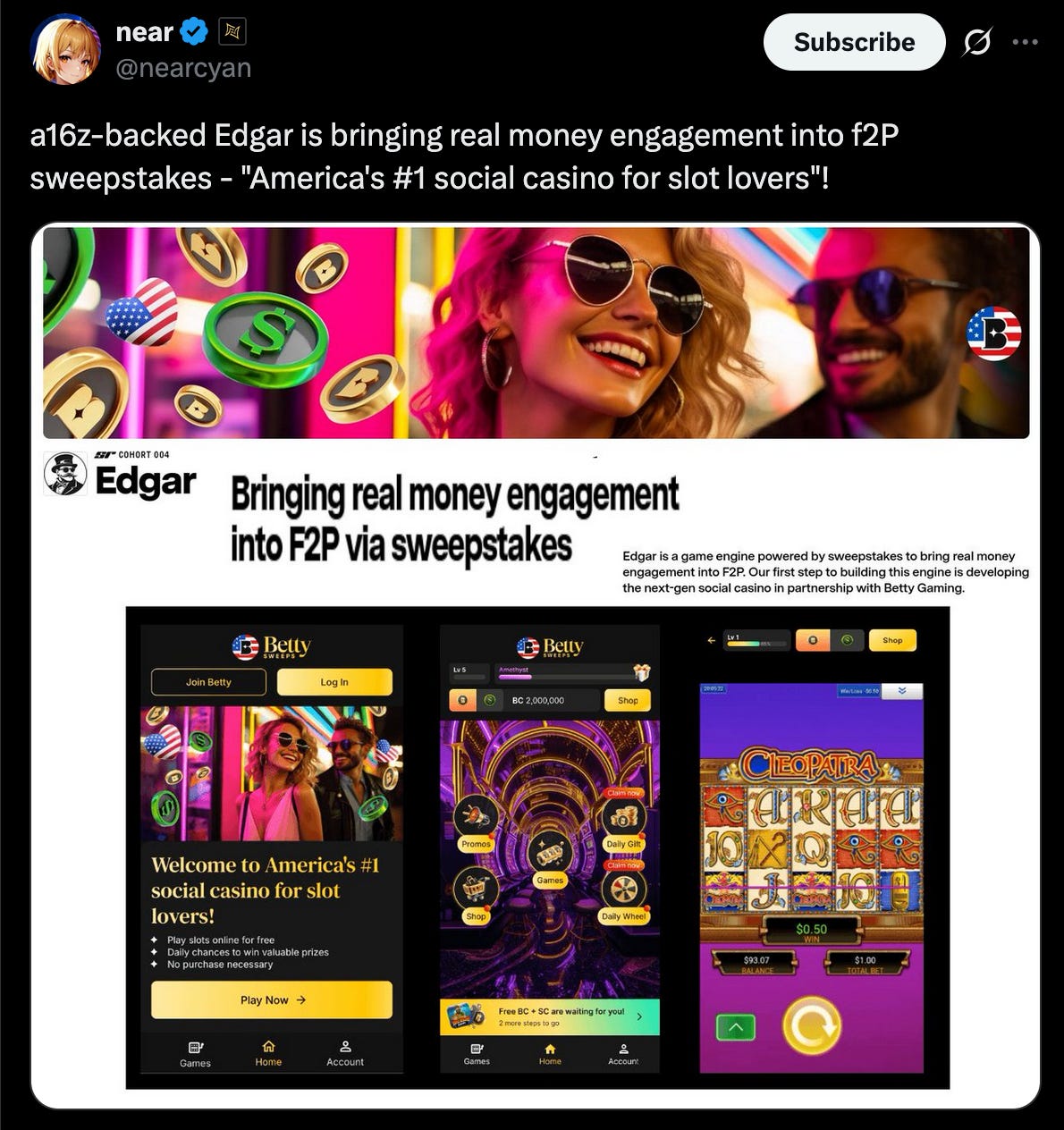
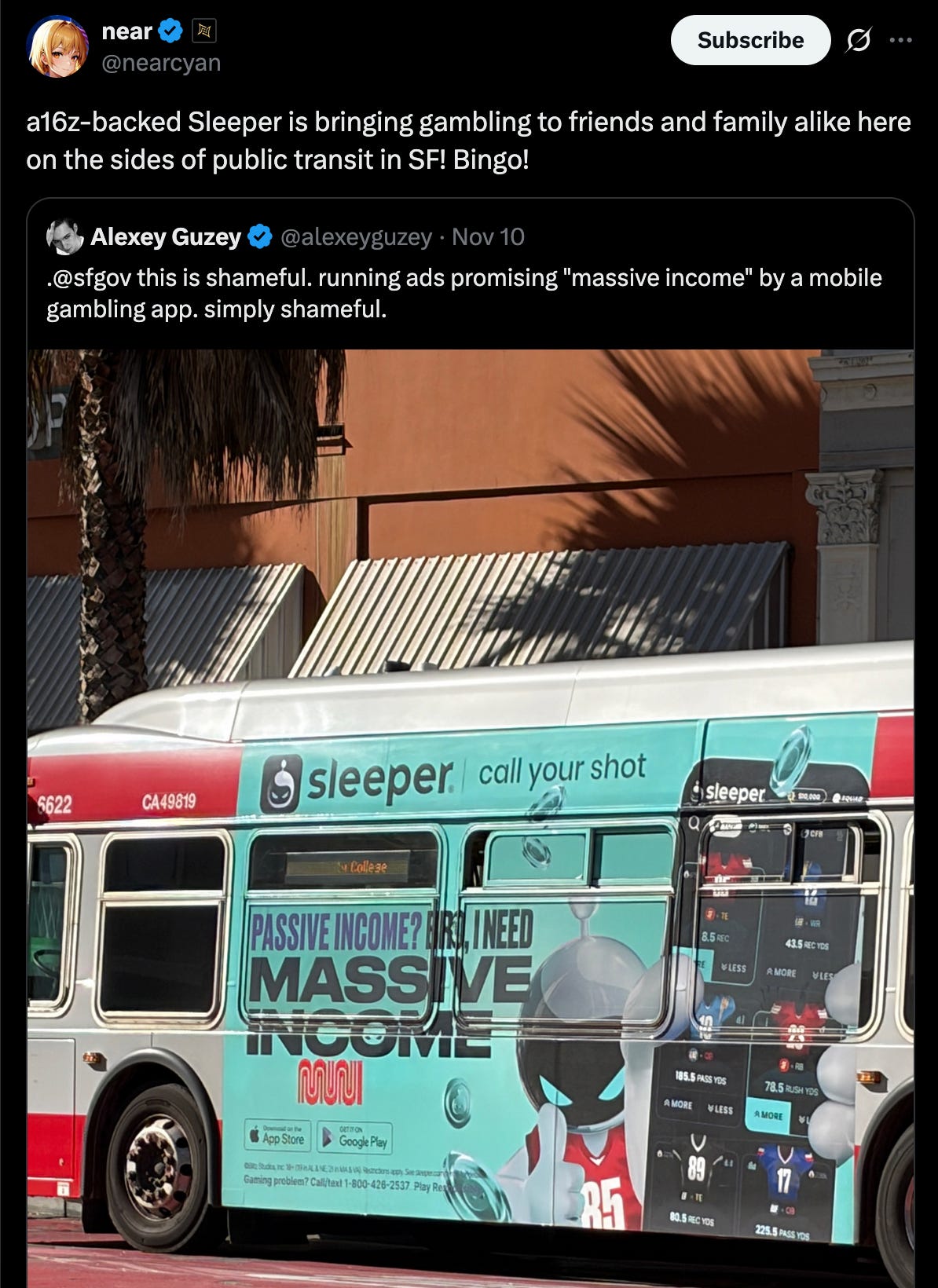
And, of course, the biggest inspiration for this post is the real-life a16z, whose recent investments have been well-documented by nearcyan: